Climate change and ecosystems : challenges to sustainable development /

|


 人氣指樹

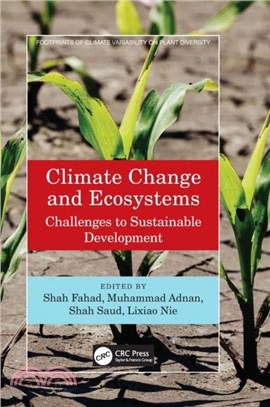
The global population is projected to increase by 3.3 billion from 6.7 billion in 2008 to 10 billion in 2100. As a result, soil degradation and desertification are growing due to the increasing demand for food, feed, fiber, and fuel on finite soil resources. The problem of global food insecurity may be further worsened by the threat of global warming. Climate change is showing its impacts in terms of increasing temperatures, variable rainfall, and an increase in climate-related extremes such as floods, droughts, cyclones, sea-level rise, salinity, and soil erosion. The agriculture sector is the most sensitive to climate change because the climate of a region/country determines the nature and characteristics of vegetation and crops. Increase in the mean seasonal temperature and decrease in effective precipitation can reduce the duration of many crops, may lead to outbreaks of pests and diseases, and hence reduce final yield ultimately affecting the food security of the country. Despite the positive impact of CO2 fertilization, the net productivity may decrease because of an increase in respiration rate, drought stress, and nutrient deficiency. For example, for every 75 ppm increase in CO2 concentration, rice yields will increase by 0.5 t/ha, but the yield will decrease by 0.6 t/ha for every 1°C increase in temperature. The global agricultural productivity is expected to decrease from 3% to 16% by 2080. The estimated decrease in agricultural productivity in the developing countries is 10%25% in the 2080s, where average air temperature is already near or above crop tolerance levels. This book is intended to serve as a stimulating collection that will contribute to debate and reflection on the sustainable future of agriculture and food production in the face of global change.Features: This book brings together a multidimensional group of international scholars exploring the ethical dimensions of climate change and ecosystem.New strategies have been pointed out in this book for better sustainable development.This book has been designed to provide a good overview of major challenges facing policymakers, researchers, and ultimately humankind in dealing with climate change.This book summarizes the diverse features of vulnerability, adaptation, and amelioration of climate change in respect to plants, crops, soil, and microbes for the sustainability of the agricultural sector, and, ultimately, food security for the future.This book provides a state-of-the-art description of the physiological, biochemical, and molecular status of the understanding of abiotic stress in plants. Dr. Shah Fahad is a Professor in the Hainan Key Laboratory for Sustainable Utilization of Tropical Bioresource, College of Tropical Crops, Hainan University. Haikou. China. He obtained his Ph.D. in Agronomy from Huazhong Agriculture University, China, in 2015,. After doing his postdoctoral research in Agronomy at the Huazhong Agriculture University (2015_2017), he accepted the position of Assistant Professor at the University of Haripur. He has published over 332 peer-reviewed papers (impact factor 1050.18) with more than 300 research and 32 review articles, on important aspects of climate change. plant physiology and breeding, plant nutrition, plant stress responses and tolerance mechanisms, and exogenous chemical priming-induced abiotic stress tolerance. He has also contributed 58 book chapters to various book editions published by Springer, Wiley-Blackwell, and Elsevier. He has edited 17 book volumes, including this one, published by CRC Press, Springer, and Intech Open. He won the Young Rice International Scientist Award, Distinguished Scholar Award, Young Investigator Award, Dr. Shah Jahan Agriculture Award (PAS) in 2014, 2015, 2019, 2021, respectively. He won 15 projects from and international and nationa donor agencies. Dr. Shah Fahad has been figured twice among the top 2% sci- entists in a global list compiled by the Stanford University, USA. Dr. Shah Fahad is also included in the distinguished list of 2021 highly cited researchers announced by the Clarivate/Web of Sciences. He has been working on a wide range of topics, including climate change, greenhouse emission gasses, abiotic stresses tolerance, roles of phytohormones and their interactions in abiotic stress responses, heavy met- als, and regulation of nutrient transport processes. Dr. Muhammad Adnan is a lecturer in the Department of Agriculture at the University of Swabi, Pakistan. He has completed his Ph.D. (Soil Fertility and Microbiology) in the Department of Soil and Environmenta] Sciences at the University of Agriculture, Peshawar, Pakistan, and the Department of Plant, Soil and Microbial Sciences, Michigan State University, USA. He has also received his M.Sc. and B.Sc. (Hons.) from the Department of Soil and Environmental Sciences at the University of Agriculture, Peshawar, Pakistan. Dr. Shah Saud is currently working as an Assistant Professor in the College of Life Science, Linyi University, Linyi, China. Hereceived his Ph.D. in Turf Grasses (Horticulture) from Northeast Agricultural University, Harbin, China. He is currently working as a Post Doctorate researcher in the Department of Horticulture, Northeast Agricultural University, and Harbin, China. Dr. Shah Saud has published over 160 research publications in peer-reviewed journals. He has edited 5 books and written 35 book chapters on important aspects of plant physiology, plant stress responses, and environmental problems in relation to agricultural plants. According to Scopus, Dr. Shah Saud's publications have received roughly 3000 citations with an h-index of 34. Dr. Lixiao Nie is a Professor and Ph.D. supervisor in Crop Cultivation and Farming System at College of Tropical Crops, Hainan University, Haikou, China. He received a Ph.D. degree in Crop Cultivation and Farming System from Huazhong Agricultural University, China in 2008. In 2005-2007, He conducted his Ph.D. thesis research at the Philippines-based International Rice Research Institute under the super vision of Drs, Shaobing Peng and Bas Bouman. He then joined Huazhong Agricultural University and worked as a Crop Physiologist from 2008 to 2019. In 2019, he moved to Hainan University. His research mainly focuses on crop simplified and green planting and cultivation. He teaches courses related to plant physiology and crop cultivation, and has published more than 90 papers/chapters in international jour- nals and books. His h-index and RG score are 28 and 35.83, respectively. He served as Editorial Board Member for international journals such as Field Crops Research (2018-now) and Scientific Reports (2015-now), and Deputy Editor in chief for a Chinese national journal (2020-now). He received 'leading talents' and *one thousand talents project' from Hainan Province, China in 2020. In recent years, he has presided over four NSFC projects and two national key R&D projects.
|
書架附近的資料 :
|
| ||||||||||||||||||||||||||||||||||||||||||||||||||||||||||||||||||||||||||||||||
 借閱次數
:
借閱次數
: 
 點閱:19
點閱:19
 評分:0
評分:0
 評論:0
評論:0
 引用:0
引用:0