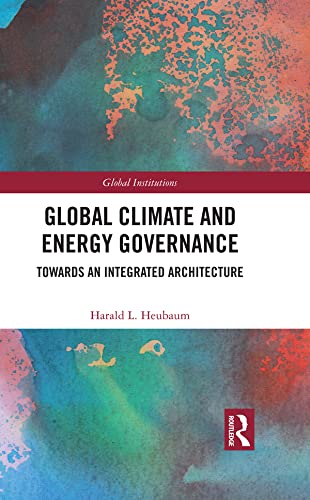
Global climate and energy governance : towards an integrated architecture /

|


 人氣指樹

Tracing the changing activities of international bureaucracies active in global climate and energy governance, this book provides an in-depth analysis of processes of institutional innovation and governance integration between the two fields. It shows that rather than the consequence of a designed strategy, governance integration – the convergence of approaches and practices among different actors within one or between two or more governance architectures – has come as the result of organizational changes arising from the international bureaucracies’ various efforts to pursue and broaden their mandate in a complex and dynamic global policy environment. Each of the three cases analyzed (the UNFCCC Secretariat, the IEA Secretariat and the World Bank) began their life focused on particular activities that today, following periods of sustained organizational change, make up only part of their operations. Beyond creating greater synergies for cooperation across the governance architectures, improving policies, and mobilizing greater investment to tackle the climate emergency, the book shows governance integration to have contributed to preserving and expanding the role and relevance of all three international bureaucracies. Harald L. Heubaum is Senior Lecturer (Associate Professor) in Global Energy and Climate Policy at the Centre for International Studies and Diplomacy, Department of Politics and International Studies, SOAS University of London. He is also Deputy Director and Co-Founder of the SOAS Centre for Sustainable Finance.
|
書架附近的資料 :
|
| |||||||||||||||||||||||||||||||||||||||||||||||||||||||||||||||||||||||||||||||||||||||||||||||
 借閱次數
:
借閱次數
: 
 點閱:22
點閱:22
 評分:0
評分:0
 評論:0
評論:0
 引用:0
引用:0